Transmission Fluid Change Interval: What to Know
Don't trust the 'lifetime' fluid myth. Learn the real transmission fluid change interval for your car or truck in Mesa, AZ to prevent costly transmission
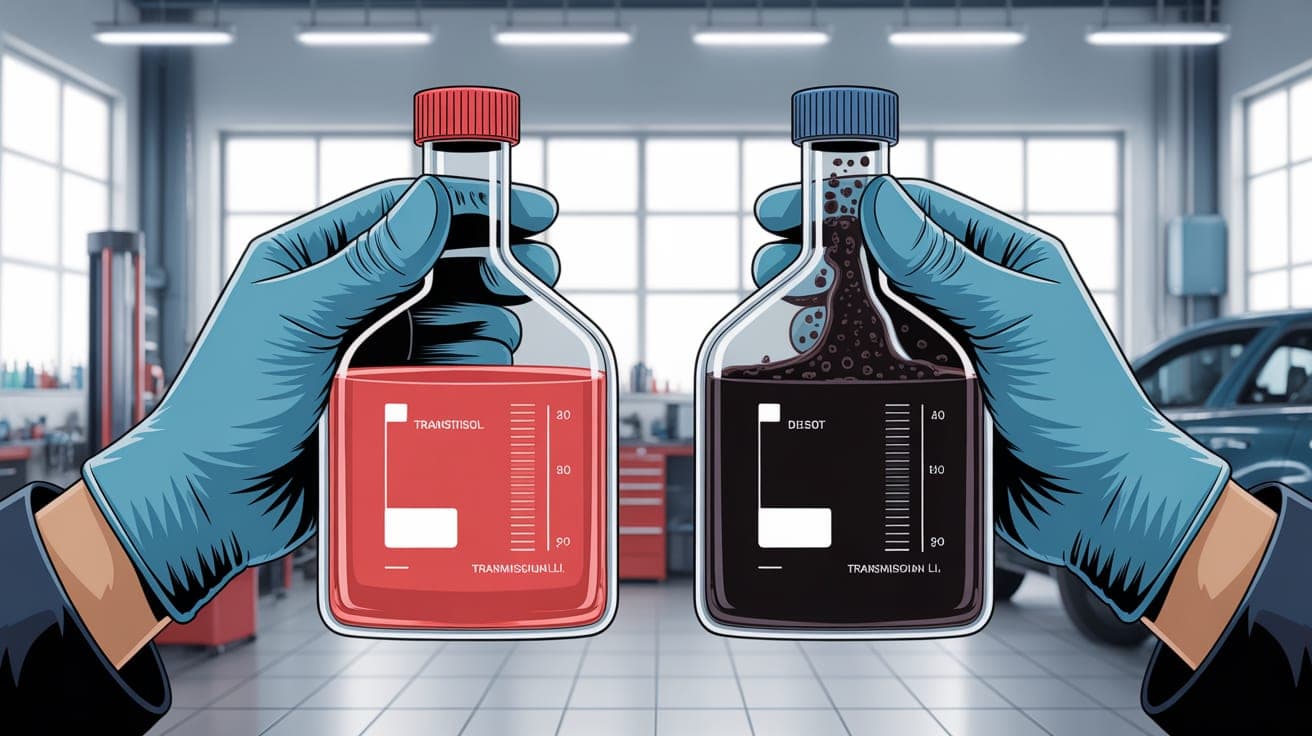
For most vehicles in Arizona, the correct transmission fluid change interval isn't 'lifetime'—it's every 30,000 to 60,000 miles. At Mesa Auto & Fleet, we stress this essential service because fluid breakdown from heat and contamination is the top cause of premature transmission failure, leading to expensive repairs.
Table of contents
- What Does 'Lifetime' Transmission Fluid Actually Mean?
- Why Your Transmission Fluid Change Interval Matters
- What is the Optimal Transmission Fluid Change Interval for My Vehicle?
- Signs Your Transmission Fluid Needs Changing
- Frequently asked questions
What Does 'Lifetime' Transmission Fluid Actually Mean?
'Lifetime' fluid is a marketing term, not a mechanical reality. The 'lifetime' refers to the manufacturer's expected service life of the vehicle—often defined by the warranty period, which is far shorter than the years most people actually own their cars. It assumes ideal, light-duty operating conditions that almost no vehicle in Mesa, AZ, ever experiences. Relying on this claim is a common path to premature wear and, eventually, significant and expensive transmission problems.
Your automatic transmission is a high-pressure hydraulic system with hundreds of moving parts. The fluid, or Automatic Transmission Fluid (ATF), is its lifeblood. It serves multiple critical functions:
- Lubrication: Reduces friction between clutch packs, gears, and bearings.
- Cooling: Carries heat away from internal components to the transmission cooler.
- Hydraulic Pressure: Engages clutches and bands to shift gears.
- Cleaning: Holds contaminants and debris in suspension until they can be filtered out.
Over time, none of these properties remain stable. Ultimately, the fluid cannot perform these jobs effectively forever.
Why Your Transmission Fluid Change Interval Matters
Understanding why transmission fluid degrades shows why a regular change interval is non-negotiable for vehicle longevity. The three primary enemies are heat, oxidation, and shear.
Heat is the single greatest threat to your transmission. Normal operating temperatures can be around 175°F, but under heavy loads like towing, climbing hills, or even sitting in stop-and-go traffic, temperatures can spike well over 200°F. At these elevated temperatures, the fluid begins to oxidize—a chemical reaction with oxygen that permanently changes its composition. Oxidized fluid becomes thicker, loses its lubricating properties, and forms sludge and varnish that can clog narrow hydraulic passages, leading to shifting problems.
Shear is the physical tearing apart of the fluid's molecules. The tight tolerances and high pressures inside a modern transmission literally shred the long-chain polymers that give the fluid its specific viscosity (its thickness or resistance to flow). As the fluid shears down, it becomes thinner and less capable of creating a protective film between moving parts, accelerating wear.
Contamination is the final factor. Microscopic metal particles from normal wear, along with clutch material, accumulate in the fluid. While the filter catches some, it can't get everything. This abrasive material circulates through the system, acting like liquid sandpaper on sensitive components like solenoids and valve bodies. A fluid change removes these suspended contaminants.
What is the Optimal Transmission Fluid Change Interval for My Vehicle?
There is no single correct transmission fluid change interval; the right schedule depends entirely on your vehicle and how you use it. While an owner's manual provides a baseline, it often lists a 'severe' service schedule in the fine print—and the reality is that most driving in the Phoenix metro area qualifies as severe duty. Heat, city traffic, and occasional heavy loads all accelerate fluid breakdown.
We recommend a service schedule based on real-world conditions, not just mileage. This proactive approach is far less expensive than dealing with the consequences of a missed service interval, which often require complex transmission repair.
Here’s a guide to help you determine a practical interval:
| Driving Condition | Key Stress Factors | Recommended Interval |
|---|---|---|
| Normal Commuting | Mix of highway and city driving, moderate climate, no heavy loads. | 50,000 - 60,000 Miles |
| Severe City Driving | Frequent stop-and-go traffic, short trips, hot climate (like Mesa, AZ). | 30,000 - 45,000 Miles |
| Heavy Towing/Hauling | Towing trailers, boats, or carrying heavy loads in a work truck or van. | 25,000 - 30,000 Miles |
| High-Performance | Aggressive driving, track use, or modified engines that produce more heat. | Every 15,000 Miles or Annually |
This schedule is particularly critical for the work trucks and vans we manage for our fleet services clients, as their transmissions are under constant strain.
Signs Your Transmission Fluid Needs Changing
Your vehicle often provides clear warning signs that its fluid is degraded and a transmission service is overdue. Ignoring these can lead to irreversible damage, so be aware of any new or unusual behavior from your transmission.
- Delayed or Harsh Shifting: If your car hesitates before going into gear or shifts with a noticeable clunk, it's often a sign of low or ineffective fluid.
- Slipping Gears: The engine revs up, but the car doesn't accelerate accordingly. This indicates the clutches aren't engaging properly, a classic symptom of fluid problems.
- Dark or Burnt-Smelling Fluid: Healthy ATF is bright red and has a slightly sweet smell. If you check the dipstick and the fluid is dark brown or black and smells burnt, it is oxidized and has lost its protective qualities.
- Whining or Grinding Noises: Unusual noises from the transmission area often point to a lack of lubrication, meaning the fluid is no longer creating a sufficient barrier between metal parts.
- Overheating: If your vehicle's temperature gauge runs hot, especially under load, it can be related to the transmission. The fluid is responsible for cooling, and when it fails, the whole system can overheat. In some cases, a severe transmission issue can even trigger a check engine light in your Mesa vehicle.
If you notice any of these signs, it's time to have your transmission inspected by a professional. Catching it early can be the difference between a simple fluid service and a complete rebuild.
Your Partner in Proactive Maintenance
At Mesa Auto & Fleet, our advice is built on clear communication and real-world vehicle data, not marketing terms. We help you establish a transmission fluid change interval based on your specific driving habits in Arizona, protecting your investment. A timely fluid service is one of the most cost-effective ways to guarantee a long, reliable life for your car, truck, or fleet.
Don't wait for a problem to appear. If you're unsure about your vehicle's last service or want to establish a proper maintenance schedule, contact the team at our Mesa auto shop today. We're here to provide honest answers and expert service for all your gas and diesel vehicle needs. Mesa Auto & Fleet — 416 E Baseline Rd, Mesa, AZ 85204 — (480) 656-2586.
Frequently asked questions
How often do I really need to change transmission fluid?
For most modern automatic transmissions, a fluid change every 30,000 to 60,000 miles is a safe and effective interval. Vehicles used for towing, heavy hauling, or frequent stop-and-go driving in hot climates benefit from more frequent changes, closer to the 30,000-mile mark.
Why do some mechanics say not to change old transmission fluid?
This is a common myth based on a misunderstanding. The theory is that on a high-mileage, neglected transmission, the old, dirty fluid contains clutch material that provides friction, and new, clean fluid will cause the clutches to slip. In reality, if a transmission fails after a fluid change, it was already on the verge of failure. The new fluid simply exposed a pre-existing mechanical problem that the old, sludgy fluid was masking.
Is 150,000 miles too late to change transmission fluid?
It is never ideal, but it may not be too late. If the transmission is still shifting properly, a series of drain-and-fill services (not a high-pressure flush) can be beneficial. This method gradually replaces the old fluid without dislodging large deposits of sludge that could clog passages. It's critical to have a professional technician assess the fluid's condition and the transmission's health before proceeding.
How late is too late to change transmission fluid?
It is generally considered too late to service a transmission if it is already exhibiting severe symptoms of failure, such as major slipping, grinding noises, or an inability to engage gears. At that point, a fluid change is unlikely to fix the internal mechanical damage that has already occurred, and a full repair or rebuild is typically necessary.
What's the difference between a transmission flush and a drain-and-fill?
A drain-and-fill is a simple gravity-based process that removes about 30-50% of the old fluid from the transmission pan, which is then replaced with new fluid. A flush uses a machine to pump new fluid through the system while pumping the old fluid out, replacing nearly 100% of the fluid. While a flush is more complete, a drain-and-fill is a gentler and often safer option for older or higher-mileage vehicles.
Does my manual transmission need fluid changes too?
Yes. Manual transmission fluid (often a heavier gear oil) also breaks down over time. While the intervals are typically longer than for automatics—often in the 50,000 to 100,000-mile range—changing it is essential for smooth shifting and protecting the gears and synchronizers from wear.
Do CVT, DCT, or other special transmissions have different needs?
Absolutely. Continuously Variable Transmissions (CVTs) and Dual-Clutch Transmissions (DCTs) use highly specialized fluids and have unique service requirements. They are often more sensitive to fluid degradation. It is crucial to use the exact fluid specified by the manufacturer and follow their recommended service intervals, which can be as frequent as every 30,000 miles.