Advanced Diagnostics: Decoding Modern Vehicle Data
Unlock the secrets of your vehicle's complex issues with advanced automotive diagnostics. Get pinpoint accuracy for gas & diesel repairs in Mesa, AZ.
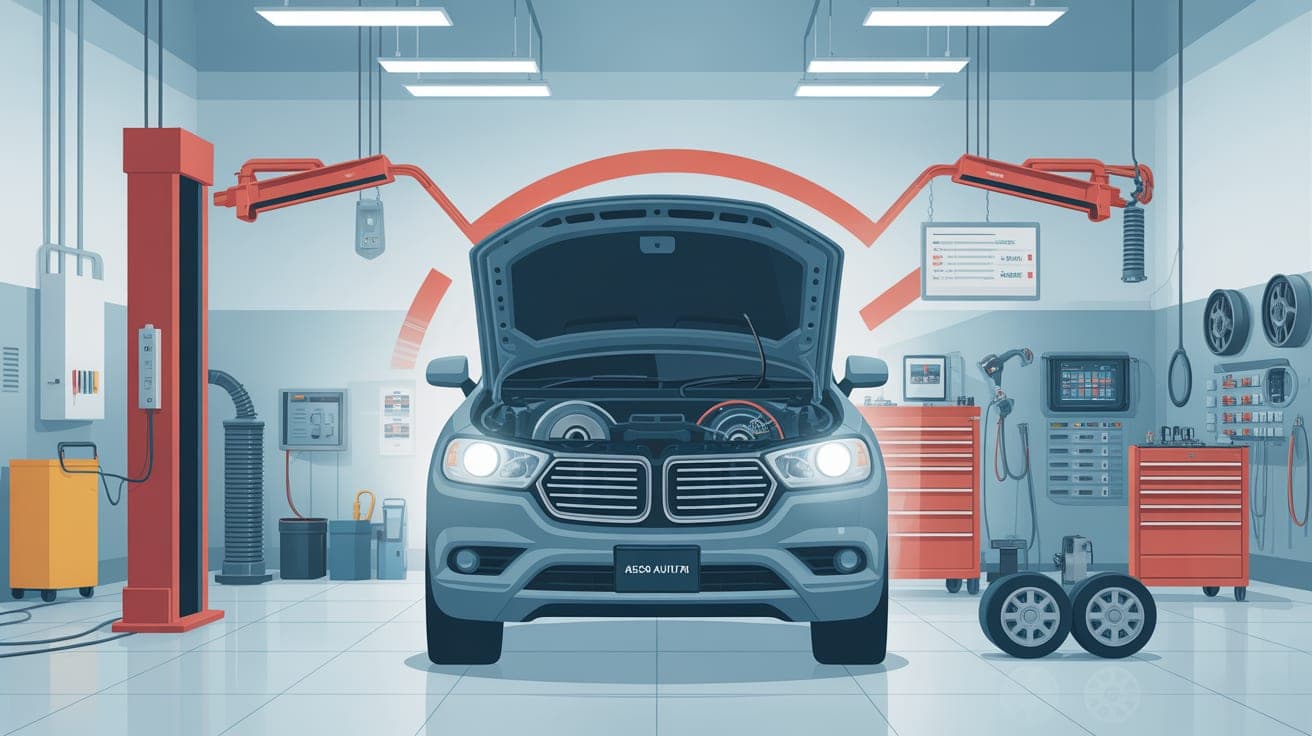
At Mesa Auto & Fleet, we use advanced automotive diagnostics to interpret complex data from your vehicle's interconnected systems. This process goes far beyond simple code reading, allowing our technicians to command vehicle modules directly, test components in real-time, and pinpoint the root cause of issues with unmatched accuracy.
Table of contents
- What Are Advanced Automotive Diagnostics, Really?
- How Does the Technology Behind Advanced Automotive Diagnostics Work?
- Why Is This Level of Diagnostics Crucial for My Modern Car or Fleet?
- How Do I Choose the Right Shop for Advanced Automotive Diagnostics in Mesa?
- Frequently asked questions
What Are Advanced Automotive Diagnostics, Really?
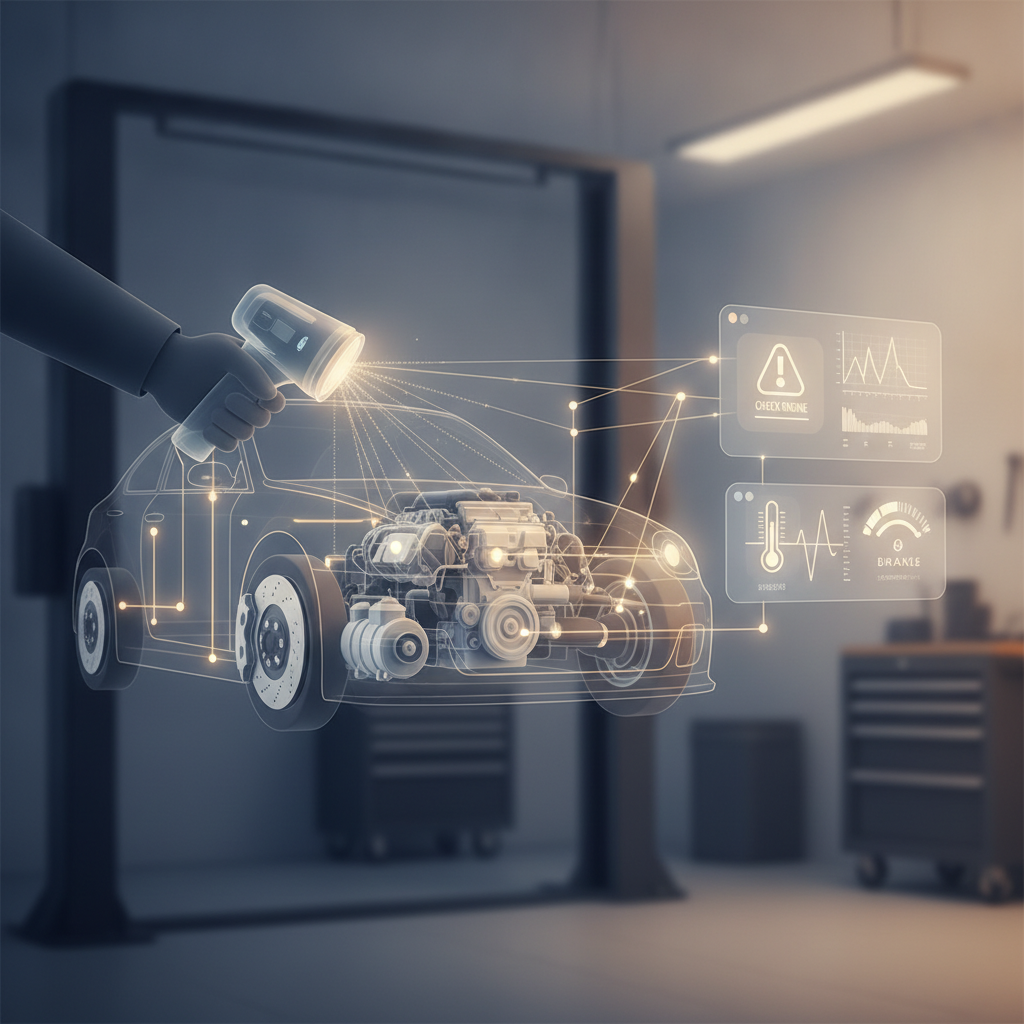
Advanced automotive diagnostics is the process of using sophisticated scanning tools to communicate directly with all of your vehicle's onboard computer systems, not just the primary engine controller. Unlike a basic code reader that only pulls generic trouble codes (DTCs), an advanced diagnostic platform accesses the manufacturer-specific data streams from modules controlling your transmission, brakes (ABS), airbags (SRS), climate control, and dozens of other functions. It is an interactive investigation, not a simple report. This level of access allows a technician to see the full context of a problem, test individual components through the vehicle's own network, and confirm that a repair has actually solved the issue.
How Does the Technology Behind Advanced Automotive Diagnostics Work?
The core technology relies on accessing and interpreting data from your vehicle's Controller Area Network (CAN bus) and other internal networks. Think of the CAN bus as your car's central nervous system, connecting all the different electronic control units (ECUs), or modules, so they can share information. A basic code reader passively listens for error messages. An advanced tool actively participates in the conversation.
Here are the key components that make this possible:
-
Multi-System Data Access: Your vehicle has dozens of specialized computers. One manages the engine, another the anti-lock brakes, a third the body controls (windows, locks), and so on. An advanced scanner can poll each of these modules individually, retrieving not just fault codes but hundreds of live data parameters. This allows a technician to see, for example, if a transmission shifting problem is being caused by a faulty speed sensor reading from the ABS module—a connection a basic code reader would never make.
-
Bidirectional Control: This is perhaps the most critical difference. Bidirectional control is the ability for the diagnostic tool to send commands to the vehicle's modules, forcing a component to actuate on demand. Instead of just reading that a fuel pump's pressure is low, a technician can use the tool to command the pump to turn on and off. If the pump runs, the problem is likely in the wiring or the control module. If it doesn't, the pump itself has failed. This turns guesswork into a definitive test, saving time and preventing the replacement of perfectly good parts.
-
Cloud Integration and AI: Modern diagnostic platforms are no longer isolated devices. They connect to the cloud to access vast databases of information. This includes OEM repair procedures, wiring diagrams, and known-good values for sensor readings. As noted by Shenzhen Xtooltech Intelligent Co., Ltd., AI-powered capabilities began being integrated into diagnostic tablets in 2025, providing technicians with real-time fault interpretation and troubleshooting suggestions. This enhances accuracy and dramatically reduces diagnostic time by leveraging data from thousands of similar repairs.
This technology is constantly evolving. A new standard called OBD II UDS (Unified Diagnostic Services) is being introduced in many 2025 models for full implementation by 2027, according to Vehicle Diagnostics Changes OBD II UDS. This standardizes protocols for even more vehicle systems, making comprehensive diagnostic access more critical than ever.
Comparing Diagnostic Tools
Not all diagnostic approaches are created equal. The tool used directly impacts the accuracy and efficiency of the repair.
| Capability | Basic OBD-II Code Reader | Professional Advanced Diagnostic Scanner |
|---|---|---|
| Code Reading | Reads generic powertrain codes (P-codes). | Reads generic and manufacturer-specific codes from all modules (engine, ABS, SRS, body, etc.). |
| Live Data | Shows a limited set of engine data points. | Streams extensive live data from all modules, with the ability to graph and record parameters. |
| Bidirectional Control | None. It is a read-only device. | Full capability. Can command solenoids, relays, motors, and injectors to function for testing. |
| Special Functions | None. | Performs system relearns, calibrations, and programming (e.g., key fobs, ABS brake bleeding, injector coding). |
| Best Use Case | DIY enthusiast checking a simple Check Engine light. | Professional shop diagnosing complex, intermittent, or multi-system electronic faults. |
Why Is This Level of Diagnostics Crucial for My Modern Car or Fleet?
Modern vehicles are rolling data centers, and a simple symptom can have dozens of potential root causes. A flickering headlight might not be a bad bulb, but a fault in the Body Control Module. Advanced diagnostics are essential for accuracy, safety, and cost-effectiveness.
The global market for these services reflects this necessity. The Advanced Vehicle Diagnostics and Remote Services Market is projected to grow from USD 7.3 billion in 2025 to USD 23.4 billion by 2035, according to industry analysis. This growth is driven by vehicle complexity and the clear benefits of getting the diagnosis right the first time.
For Individual Drivers:
- Saves Money: Prevents the expensive cycle of replacing parts based on a guess. You pay for a precise diagnosis and the correct repair, not experimental part-swapping.
- Ensures Safety: Correctly diagnosing issues within the ABS, traction control, or airbag systems is critical. A misdiagnosis can leave safety systems compromised.
- Future-Proofs Repairs: As vehicles become more connected and electrified, the diagnostic requirements will only increase. California is already proposing an industry-standard diagnostic system for EVs for 2026, mandating access to battery, charging, and power electronic data.
For Fleet Managers: For our fleet clients, the benefits are magnified. Utilizing remote and advanced diagnostics is a strategic advantage. Fleet operators have reported 10–18% improvements in vehicle uptime and 6–9% reductions in maintenance costs by shifting to predictive models, as reported by IMARC Group. By analyzing vehicle data remotely, we can spot trends, predict failures before they happen, and schedule maintenance proactively to keep your vehicles on the road and earning revenue. With a projected 400 million connected vehicles on the road in 2025, the infrastructure for this proactive fleet management is firmly in place.
How Do I Choose the Right Shop for Advanced Automotive Diagnostics in Mesa?
Choosing a shop comes down to their investment in technology and technician training. The 'Right to Repair' movement and increasing cybersecurity norms, like the UN R155 rules and ISO/SAE 21434 standards, mean that modern tools must support secure, authenticated access to vehicle data. A shop using outdated or cloned equipment may not have this secure access or the ability to communicate with the newest vehicle modules.
When you evaluate a repair facility, ask these questions:
- What specific diagnostic platforms do you use? A professional shop will have multiple high-end tools from brands like Autel, Snap-on, or Bosch, not just a single generic scanner.
- Are your technicians trained in vehicle network diagnostics? Understanding how the CAN bus works is as important as being able to read a code.
- Do you have access to OEM repair information? The tool is only half the equation. The other half is having the manufacturer's data to correctly interpret the results.
At Mesa Auto & Fleet, we invest heavily in dealership-level diagnostic equipment and continuous training for our technicians. We believe in showing you the data, explaining the fault, and outlining a clear, logical repair plan. We handle everything from gas and diesel trucks to complex European models because our diagnostic process is built to handle modern vehicle complexity.
If you're facing a stubborn warning light or an intermittent issue, don't settle for a simple code read. Contact Mesa Auto & Fleet — 416 E Baseline Rd, Mesa, AZ 85204 — (480) 656-2586 for a true diagnostic assessment that gets to the root of the problem.
Frequently asked questions
What is the difference between a diagnostic code and a diagnosis? A diagnostic trouble code (DTC) is just a starting point—a message from a vehicle module indicating a fault in a specific circuit or system. A full diagnosis is the investigative process a technician uses, including testing components, analyzing live data, and using bidirectional controls, to determine the exact cause of that code.
Can you perform advanced diagnostics on both gas and diesel vehicles? Yes. While the engine control systems differ, the underlying principle of networked computer modules is the same. We use specialized hardware and software for both gas and heavy-duty diesel engines to access all vehicle systems and perform accurate, in-depth diagnostics.
How long does an advanced diagnostic service take? The initial data scan is quick, often taking 15-30 minutes. The full diagnostic process, however, can range from an hour to several hours depending on the complexity of the issue. Intermittent electrical faults, for example, require more extensive testing than a simple sensor failure.
Is it worth paying for diagnostics if the problem seems simple? Absolutely. What seems like a simple problem, such as a rough idle, can have many causes (vacuum leak, faulty injector, bad sensor, ignition issue). A proper diagnosis prevents you from spending money on parts you don't need and ensures the actual problem is fixed correctly the first time.
My car is brand new. Why would it need advanced diagnostics? New vehicles have more complex software and electronics than ever before. Warranty repairs often require a dealer or a properly equipped independent shop to run specific diagnostic routines to confirm a component failure before the manufacturer will authorize and cover the replacement part.
Will running diagnostics void my vehicle's warranty? No. Having your vehicle diagnosed by a qualified independent shop like Mesa Auto & Fleet will not void your warranty. The Magnuson-Moss Warranty Act protects your right to have your vehicle serviced at the facility of your choice. We use equipment that communicates securely and according to manufacturer protocols.